AI & Machine Learning
NVIDIA Introduces GR00T 2, a New AI Model for Teaching Robots
NVIDIA has introduced GR00T 2, a world-action model designed to help robots learn precise, multi-step tasks and transfer skills across different robot bodies. The announcement also highlights new simulation and evaluation tools.
DailyBox Pulse Editorial5 min read
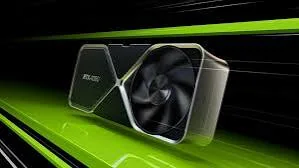
NVIDIA has introduced GR00T 2, a new AI model designed to help robots learn physical tasks that require more than basic movement. Announced on November 9, 2026, at the Conference on Robot Learning (CoRL), GR00T 2 is built to help robots understand how actions change the physical world and carry out precise, multi-step tasks such as handling objects, connecting cables and assembling components. NVIDIA also highlighted updates to its Isaac robotics platform and new tools for evaluating robot skills. NVIDIA's announcement
What is NVIDIA GR00T 2?
GR00T 2 is what NVIDIA calls a world action model. Rather than focusing only on selecting a robot movement, the model predicts future visual states alongside the actions that could produce them. The goal is to help a robot anticipate the results of an action, then use that understanding to perform a task.
The model is built on NVIDIA Cosmos and is trained using a mixture of human and robot data. NVIDIA says its training includes 100,000 hours of open-source, first-person human video, alongside other robot and human demonstrations. The company designed GR00T 2 to work with different types of robotic hardware, including parallel grippers, dexterous hands and humanoid robots. NVIDIA Research
What can GR00T 2 do?
NVIDIA's announcement focuses on three capabilities:
- Learn from demonstrations: A robot can use demonstrations from people or other robots as a starting point for learning a task.
- Transfer skills across robot bodies: Skills demonstrated with one type of hardware can be adapted to another robot, even when the target robot has not practised the task itself.
- Handle multi-step manipulation: The model is intended for tasks that require coordinated actions and careful contact with objects, rather than only walking or moving around.
NVIDIA describes examples including package labelling, replacing a flashlight battery, assembling a toy truck and handling components. These examples are presented by NVIDIA as demonstrations of the model's capabilities, not as proof that every robot can reliably perform those tasks in everyday environments.
What do the performance results show?
NVIDIA reports that GR00T 2 completed 40 of 50 evaluated tasks at least once without task-specific demonstrations on the target robot. The company also reports an average success rate of 71% with one demonstration per task and 95% with five demonstrations.
According to NVIDIA, the five demonstrations required less than three minutes of robot data per task, followed by a 30-minute fine-tuning process on a single NVIDIA RTX 5090.
These figures are NVIDIA-reported results from its own evaluation setup. They should not be interpreted as independently verified performance across all robots, tasks or real-world working conditions. Results can depend on the task selection, robot hardware, environment and evaluation method. NVIDIA's GR00T 2 research page
Isaac Lab 3.0 and the wider robotics platform
GR00T 2 was not the only announcement. NVIDIA also highlighted Isaac Lab 3.0, its open-source framework for training and refining robot behaviours in simulation.
The framework is designed to help developers create simulated environments, train robot policies and test how those policies respond to different conditions. NVIDIA says the updated workflow works with physics engines including PhysX and Newton, with support for simulating objects and interactions relevant to manipulation, such as cables, cloth and robotic hands.
NVIDIA also introduced a developer preview of Isaac Lab-Arena 0.4, an evaluation framework intended to help researchers test robot policies across repeatable tasks and variations. These tools address an important part of robotics development: a robot needs to be trained, tested and evaluated before its capabilities can be trusted outside a controlled demonstration.
Are companies already using GR00T 2?
NVIDIA named several organisations exploring or applying the technology:
- Nexuni is testing GR00T 2 for robotic laundry handling.
- Foxconn is applying it to factory automation for server manufacturing.
- Siemens is evaluating it across industrial use cases.
- MicroAGI is using a version post-trained with reinforcement learning for Ethernet cable swapping with a YAM robotic arm.
These examples describe different stages of activity. NVIDIA's announcement does not establish that all of these are completed, large-scale commercial deployments. In particular, testing and evaluation should not be presented as proof of production-wide adoption. NVIDIA Blog
Why does this matter for the future of robotics?
This section is DailyBox Pulse analysis, not a reported fact.
For years, robots have been effective at repeating carefully programmed actions in controlled environments. More flexible robots need to cope with different objects, positions and situations, and they need to recover when an action does not go as expected.
GR00T 2 reflects a broader research direction: combining large-scale data, simulation and AI models so robots can adapt to tasks instead of relying on a separate hand-crafted program for every situation.
If these approaches continue to improve, they could make it easier to develop robots for manufacturing, logistics, laboratories and other environments where precise manipulation matters. But reliable real-world performance, safety, cost and integration remain important challenges. A promising research result is not the same as a robot that can safely work unsupervised in every setting.
Frequently asked questions
What is NVIDIA GR00T 2?
NVIDIA GR00T 2 is a world-action AI model designed to help robots learn and perform physical tasks. It predicts future visual states together with robot actions and is intended to support skill transfer across different robot hardware.
Is GR00T 2 designed only for humanoid robots?
No. NVIDIA says the model is designed to work with parallel grippers, dexterous robotic hands and humanoid robots.
How successful is GR00T 2?
NVIDIA reports that it completed 40 of 50 evaluated tasks at least once without task-specific demonstrations. The company reports an average success rate of 95% after five demonstrations per task and fine-tuning. These are company-reported results from its evaluation setup, not a guarantee of performance in every real-world situation.
Can developers download GR00T 2 now?
NVIDIA's project page lists code availability for December 2026. Check the official GR00T 2 research page for the latest release details. Do not assume that the model weights, code and datasets all have the same availability or licensing terms.
What is NVIDIA Isaac Lab 3.0?
Isaac Lab 3.0 is NVIDIA's open-source framework for training and refining robot behaviours in simulation. It is part of the broader Isaac robotics development platform.
Sources
- Practice Makes Precise: At CoRL, NVIDIA and Partners Reveal How Robots Rehearse Delicate Work in Simulation · NVIDIA BlogOriginal announcement
- GR00T 2: Scaling Robot Foundation Models for Generalization, Dexterity, and Adaptation · NVIDIA ResearchOriginal announcement
- NVIDIA introduces GR00T 2 world action model and Isaac Lab 3.0 at CoRL · New RuntimeAdditional reporting
Related stories
AI & Machine Learning
Adobe MAX 2026: The Biggest AI and Creative Updates
At Adobe MAX 2026, Adobe unveiled AI-powered workflows across Creative Cloud, new Firefly creation spaces and experimental tools for video, audio and image editing. Here are the announcements that matter most.
6 min read
AI & Machine Learning
Anthropic launches Claude Fable 5.2 and Mythos 5.2: what's new
Anthropic announced Claude Fable 5.2 and Mythos 5.2 on November 9, 2026. Here is what changed, how the two models differ, and which claims come from Anthropic's own testing.
4 min read
News · Reviewed and approved by a human editor before publication. Spotted a mistake? Use the contact page and we will correct it and note the update.